Even in ‘At-Will’ California, It’s Wise to Follow Disciplinary Process
We opened up an office in California recently. We have a couple of problem employees, but I heard California employment is “at-will” and we can just terminate their employment. Is that true?
California is indeed at an at-will state, and both employer and employee can end the employment relationship at any time, with or without cause. However, an employer can’t end the relationship for an illegal or discriminatory reason.
Many individuals in protected categories (protected from discrimination) will claim their race, religion or other protected class as the basis for a termination.
In addition, at-will does not protect an employer when an employee claims they were terminated for refusing to perform an illegal act or in retaliation for engaging in a protected activity, such as taking a legally protected leave of absence.
Discipline for Misbehavior
Therefore, it is wise for an employer to follow the progressive disciplinary process, regardless of the at-will status, for employee misbehavior.
This typically begins with an oral warning or two. It is impossible to draw a precise path to follow, as so many things can take place in the workplace.
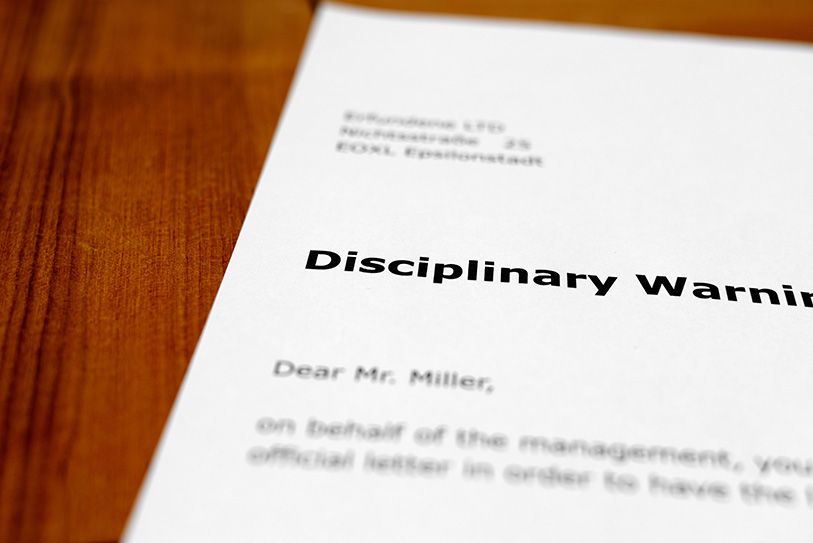
HRCalifornia has a form titled Employee Disciplinary Warning, with boxes to check for an oral warning, written warning, probation or suspension (for hourly employees only). Typically, the situation will progress to a written warning if the behavior doesn’t improve.
Some employers prefer to issue a suspension before termination. This can be done, however, only with hourly employees, not exempt. Additionally, not all employee misbehavior warrants the progressive disciplinary path. When an employee engages in truly reprehensible behavior, immediate termination may be warranted.
Discipline as Defense
For other situations, however, progressive discipline provides a defense against a claim of discrimination or illegal termination. When an employee makes such a claim, and the employer produces a personnel file with warnings, the claim should go no further.
Employees are terminated in large numbers every day. Few terminations ripen into a wrongful termination lawsuit. A personnel file with absolutely no warnings tends to lead to a presumption the employer wasn’t being up front about the terminated employee.
Never promise progressive discipline; that promise erodes the at-will status. However, practice progressive discipline, and a natural defense will be built.
Dana Leisinger, Employment Law Expert, CalChamber
CalChamber members can read more about Making a Disciplinary Decision in the HR Library. Not a member? Learn how to power your business with a CalChamber membership.