New Cal/OSHA Guidance on Worker Safety, Health During Fire Cleanup
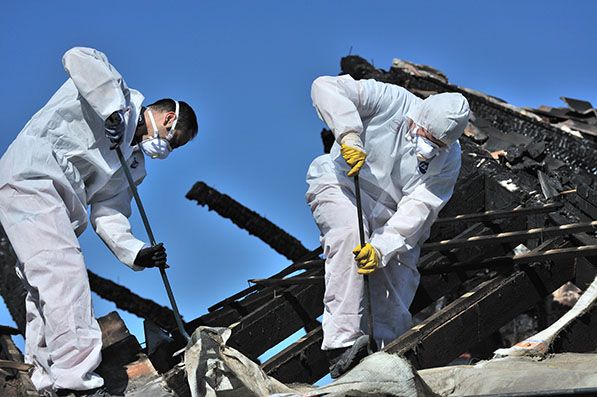
The California Division of Occupational Safety and Health (Cal/OSHA) recently released new guidance on protecting workers involved in fire cleanup or other work in areas damaged or destroyed by fire. Any fire in California is covered — from a single structure fire to the massive wildfires in Southern California.
California employers working in any fire-damaged areas are required to identify and evaluate potential hazards, including but not limited to:
- Fire and fire byproducts (e.g., heat could come into contact with flammable material and cause fire again).
- Electricity (e.g., power lines and electrical equipment can be reenergized leading to electrical deaths and injuries).
- Flammable gasses (e.g., pipes and tanks could be potentially damaged or leaking).
- Unstable structures (e.g., fire-damaged structures can collapse without warning).
- Sharp or flying objects (e.g., employees could be exposed to sharp or flying objects and other cutting hazards).
- Ash, soot and dust (e.g., when inhaled, it can cause irritation or damage to workers’ lungs).
- Heat illness (e.g., employees working outdoors must be protected from heat illness by adhering to Cal/OSHA’s heat illness prevention standard).
Read Cal/OSHA’s guidance for the full list of safety, health and confinement hazards.
After identifying and evaluating these hazards, employers must correct any unsafe or unhealthful conditions and provide training and instruction to employees.
In their guidance, Cal/OSHA points out that their standards don’t cover “household domestic service,” like cleaning, cooking and childcare, but fire cleanup work is not household domestic service and if any worker engages in fire cleanup work, they are covered by Cal/OSHA’s standards — even if they usually perform household domestic service.
Furthermore, employers can’t require any employees to enter or remain in an area subject to a mandatory evacuation (Labor Code section 6311.5). Additionally, employees have the right to leave or refuse to report to work in a disaster area if they believe it is unsafe to remain, and employers cannot take action against an employee for refusing to work in such situations. This does not apply to first responders or certain other emergency services workers (Labor Code section 1139).
Cal/OSHA’s Worker Safety and Health in Wildfire Regions has more employer resources.
Katie Culliton, Editor, CalChamber
CalChamber members can read more about Heat Illness Prevention in the HR Library. Not a member? Learn how to power your business with a CalChamber membership.