Pay Overnight Employees Correctly as Daylight Saving Time (DST) Ends on Halloween Night
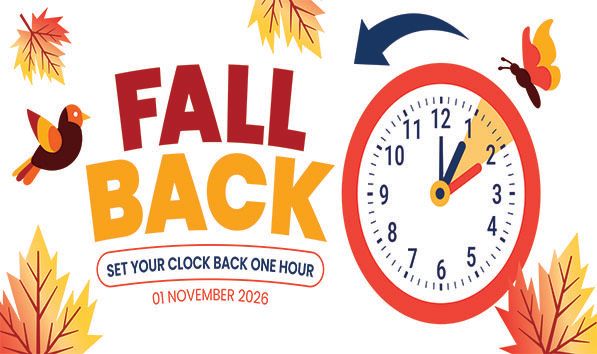
This year, everyone gets an extra hour of Halloween as daylight saving time (DST) officially ends at 2 a.m. this Sunday, November 1. When we “fall back” on Saturday night, most of us will enjoy an extra hour of festivities or sleep. However, employers need to make sure overnight workers are paid correctly for their time worked, regardless of what the clock says.
For example, on Saturday night, if an overnight employee’s regular shift runs from 11 p.m. to 7:30 a.m., that shift will be nine hours long instead of eight (including a 30-minute meal break) once the clock resets at 2 a.m. To avoid paying overtime, employers can adjust schedules so that the total worked hours remain consistent — potentially scheduling some employees to work from 11 p.m. to 6:30 a.m. and others from 12 a.m. to 7:30 a.m.
If employers don’t modify their regular shifts, and the end of DST results in an employee working a nine-hour shift, they must be paid overtime for the extra hour. In California, overtime is owed if all hours worked in a “workday” exceed eight.
These DST timekeeping complexities continue to persist despite voter attempts to eliminate them. While many Californians believed 2018’s Proposition 7 would end these biannual clock changes, it only gave the California Legislature the power to alter the state’s time observance by a two-thirds vote. However, California cannot legally implement year-round DST without an act of Congress amending federal law.
Even though, on July 14, 2026, the U.S. House of Representatives passed HR 139, which would make daylight saving time the new, permanent standard time, it still needs to pass the U.S. Senate and be signed into law by the President.
Therefore, as we fall back another year, employers should double-check timekeeping practices to ensure they are correctly paying employees.
CalChamber members can access detailed information on daylight saving time and overtime pay in the HR Library. Not a CalChamber member? Learn more about how HRCalifornia can help you.