U.S. Supreme Court Issues ‘Reverse Discrimination’ Decision
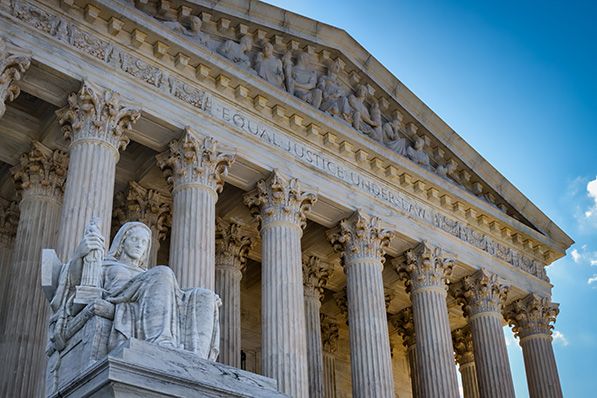
The U.S. Supreme Court unanimously ruled that members of a majority group claiming workplace discrimination do not need to meet a heightened evidentiary standard to establish their discrimination claims, resolving a federal circuit court split on “reverse discrimination” claims and sending the case back to the trial court.
In 2004, the Ohio Department of Youth Services hired Marlean Ames — a heterosexual woman — as an executive secretary. The agency eventually promoted her to program administrator, and in 2019, she applied for a newly created management position within the agency. A few days after her interview, however, her supervisors demoted her from program administrator to the secretarial role she had when she first joined the agency, which resulted in a significant pay cut. The agency hired a gay man to fill the program administrator position, and later, hired a lesbian woman to fill the management position, for which Ames had applied. Ames sued the agency under Title VII, alleging that she was denied the promotion and demoted because of her sexual orientation.
Under Title VII, discrimination claims are analyzed under a three-part framework. First, a plaintiff alleging discrimination must establish a prima facie case by “producing enough evidence to support an inference of discriminatory motive.” Then, the employer has an opportunity to refute the inference and show that the employment decision was made for legitimate nondiscriminatory reasons. If the employer does that, then the plaintiff can offer evidence that the employer’s proffered reasons are merely pretext for discrimination.
In analyzing the prima facie element, the Sixth Circuit, along with several other federal circuit courts, required plaintiffs who are members of a majority group to present additional evidence establishing “background circumstances to support the suspicion that defendant is that unusual employer who discriminates against the majority.” Here, the Sixth Circuit found that Ames failed to establish her prima facie case because she failed to meet the “background circumstances” requirement.
The U.S. Supreme Court, however, concluded that the Sixth Circuit’s “background circumstances” rule “cannot be squared with the text of Title VII” or the Supreme Court’s precedents. The Court noted that Title VII’s text draws no distinction between majority and minority group plaintiffs — instead it focuses on individuals. So, in their decision, the Court wrote, “By establishing the same protections for every ‘individual’—without regard to that individual’s membership in a minority or majority group—Congress left no room for courts to impose special requirements on majority-group plaintiffs alone.”
Ohio argued that the background circumstances requirement wasn’t an additional prima facie element but just another way of asking whether the circumstances surrounding the employment decision suggested a discriminatory motive.
The Supreme Court wasn’t convinced — noting that Ohio’s argument was directly at odds with the Sixth Circuit’s opinion, which said that because Ames is heterosexual, she must make a showing “in addition to the usual ones” for establishing the prima facie case.
Additionally, the Sixth Circuit noted that Ames would have easily established her prima facie case if not for the “background circumstances” requirement. In other words, the Sixth Circuit’s decision was based on Ames’s failure to satisfy a “heightened evidentiary standard.”
The Supreme Court concluded that Title VII doesn’t require the Sixth Circuit’s “background circumstances” rule, which means members of majority groups do not need to meet a heightened evidence standard. As such, the Court reversed and remanded the case for application of the proper standard. The Court’s decision also abrogated several circuit court decisions imposing similar heightened standards, resolving the circuit split on this issue.
For California employers, this ruling doesn’t change the standard for Title VII discrimination claims because the Ninth Circuit does not apply the extra “background circumstances” rule.
James W. Ward, J.D., Employment Law Subject Matter Expert/Legal Writer and Editor, CalChamber
CalChamber members can read more about Laws Prohibiting Discrimination in the HR Library. Not a member? See how CalChamber can help you.