U.S. Supreme Court Overturns Chevron: What It Means for Employers
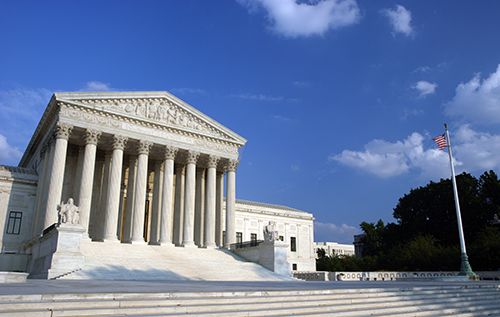
On June 28, 2024, the U.S. Supreme Court overturned Chevron, USA Inc. v. Natural Resources Defense Council, a case that, for nearly four decades, mandated that courts defer to federal agencies’ interpretations of the statutes they oversee.
The Court’s Loper Bright Enterprises v. Raimondo decision overturned Chevron and requires courts to use their own judgment in interpreting statutes without automatically deferring to agency interpretations — marking a significant shift that could impact numerous regulations, including those related to labor and employment.
To understand how the law is changing, we must first understand what it’s been.
For the past 40 years, courts nationwide have followed what’s called the Chevron deference, which essentially means that if a legal statute is ambiguous and an agency has a reasonable interpretation of this statute, courts are required to defer to the agency’s interpretation. Simply put: If the law wasn’t clear, the courts sided with the agency’s interpretation as long as it was reasonable.
This principle assumed that agencies, having expertise in their respective fields, were better equipped to interpret ambiguous statutes. In other words, Chevron deference meant that federal agencies could formulate and defend their policies with a degree of judicial deference or esteem.
In overruling Chevron, the Supreme Court declared that judges must exercise their independent judgment in interpreting statutes. While judges can consider an agency’s expertise and consistency, they are no longer bound to accept the agency’s interpretation. Now, courts may provide their own interpretation of the law.
Although the Supreme Court indicated that prior decisions relying on the Chevron framework are not overturned, this decision will likely affect how, going forward, federal labor and employment agencies — such as the Department of Labor (DOL), the Equal Employment Opportunity Commission (EEOC) and the National Labor Relations Board (NLRB) — formulate and defend their regulations. These agencies often relied on Chevron deference to uphold their regulations in court, so without this deference, their rules will face stricter scrutiny.
Take, for example, the Federal Trade Commission’s (FTC) ban on noncompete clauses and the EEOC’s interpretation of the Pregnant Workers Fairness Act covering elective abortions, both of which currently face legal challenges. With the Chevron deference being overturned, each may now be more vulnerable to increased judicial scrutiny.
Going forward, we may see a regulatory landscape where agency rules are more frequently contested in court. Accordingly, agencies may become more cautious, writing narrower rules that closely adhere to statutory language to reduce the likelihood of successful challenges, which could end up being beneficial to employers. The downside is that potentially inconsistent court rulings across different jurisdictions could complicate workplace compliance for employers. But for now, employers should continue to adhere to existing agency regulations until a court explicitly overturns the interpretations, as well as closely monitor these developments and consult with legal counsel to effectively navigate the changing regulatory environment.
Vanessa M. Greene, J.D., Employment Law Subject Matter Expert, CalChamber
CalChamber members can read more about the Pregnant Workers Fairness Act regulations in a recent HRCalifornia Extra article. Not a member? Learn how to power your business with a CalChamber membership.