San Mateo County Regulates Commercial Autonomous AI-Controlled Robots
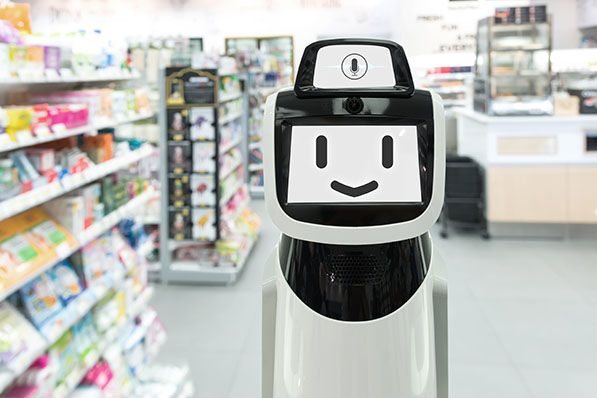
San Mateo County has adopted a new ordinance that regulates the commercial use of certain autonomous robots in the county's unincorporated areas. Ordinance No. 4926 creates Chapter 5.140 of the County Code and establishes a permit framework for businesses that deploy qualifying autonomous robots in customer-facing environments.
Specifically identifying worker displacement as a policy concern, the county stated that permit-related data may help officials evaluate employment trends and develop future policies addressing the economic effects of automation. As autonomous technologies become more common in restaurants, retail operations and hospitality settings, San Mateo County has established a regulatory framework that places the commercial use of these systems under local oversight.
The first of its kind in California, this ordinance reflects growing attention to the role of artificial intelligence and robotics in the workplace. County officials identified several concerns that influenced the legislation, including public safety, accessibility, emergency response challenges and the use of lithium-ion battery technology. The county also noted concerns about the economic effects of automation and the potential displacement of workers in service-sector jobs.
This new law applies to businesses and other covered entities that operate qualifying autonomous robots in unincorporated areas of San Mateo County. Restaurants, retail stores, hospitality businesses and other establishments that serve the public may fall within the ordinance's scope if they use covered robotic technology.
Several statutory definitions determine which technologies and employers fall within the ordinance's scope:
- “Commercial Autonomous AI-Controlled Robot” or “Covered Robot” means any untethered, physical device that meets all the following criteria:
- Is a fully or partially autonomous electromechanical machine physically operating within the unincorporated areas of San Mateo County that mimics, replaces or supplements human movement or activity, which for any amount of time operates untethered in spaces accessible to the public or alongside human workers without physical barriers. This includes any form of mobility, such as but not limited to wheels, rollers, belts, legs, other limbs and electromagnetic levitation.
- Operates in a Covered Establishment.
- Uses any combination of onboard sensors and/or cameras and artificial intelligence to operate without constant, direct human operation.
- Is powered by a rechargeable lithium-ion battery system, including but not limited to LiFePO4 or NMC chemistries, to supply energy for locomotion and electronic functions.
- Covered Establishment means any business, commercial operation or other entity or activity with a physical location that sells goods or services, serves the public and operates in the unincorporated areas of San Mateo County, including but not limited to restaurants, cafes, retail stores and hospitality venues.
The definition of a Covered Establishment applies regardless of the business's legal structure, including corporations, limited liability companies, partnerships and other business entities.
The ordinance excludes permanently stationary automation, such as self-checkout kiosks, permanently restricted-path automation, toys under 30 pounds used for personal purposes and robots used solely in private residences. The law also states that robots remain covered when they rely on off-site computing power or remote operators, so long as they operate autonomously at any point. Each autonomous unit qualifies separately under the ordinance.
A key feature of the ordinance is its permitting requirement. The San Mateo County Code Compliance Section serves as the primary agency responsible for administering the permit process, although the county may delegate that authority to another department or an outside agency. A business must obtain a permit for each covered robot at every location where it operates the robot. Businesses must also obtain additional approval before placing new robots into service or moving robots to locations not already covered by an existing permit. Permits remain valid for one year and require annual renewal.
The law also addresses incidents involving covered robots. Businesses must stop operating a covered robot when they know or have reason to believe the robot caused harm or participated in an incident that could reasonably present a threat to public safety. The ordinance identifies examples such as fires, property damage that exceeds cosmetic damage, and incidents that reasonably could have caused injury or property damage. The law also covers incidents that prompt responses from security personnel, law enforcement, firefighters or healthcare professionals.
CalChamber members can read more about artificial intelligence (AI) in the workplace in the HR California library. Not a member? Learn more about the benefits of CalChamber membership today!
Author